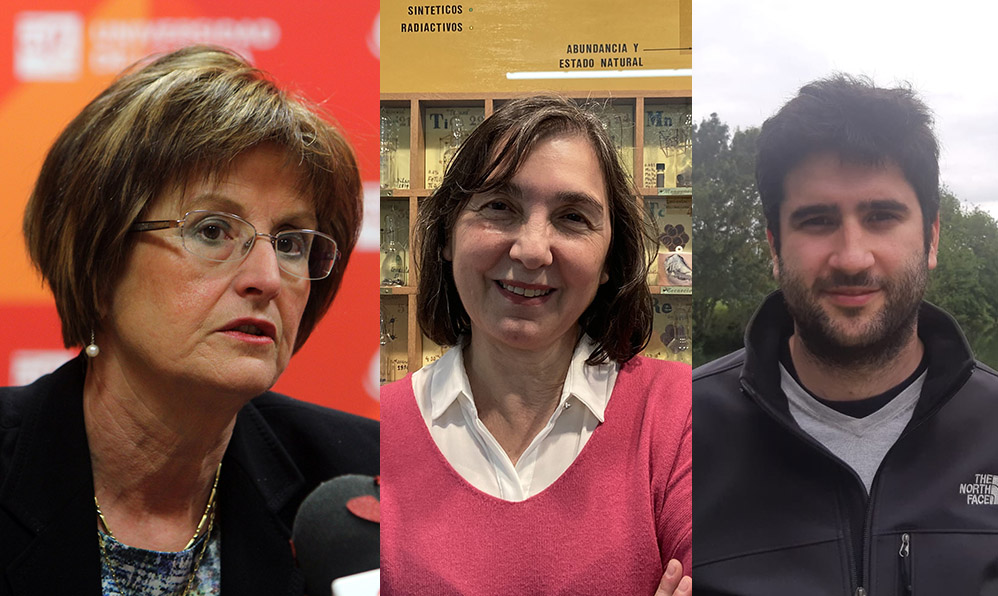
Elena Lalinde, María del Carmen Nicasio y Miquel Navarro Blasco, Premios GEQO 2026.
Una vez reunida la Comisión y evaluadas las candidaturas recibidas para los premios del GEQO-2026 según el procedimiento establecido en el ‘Reglamento Para la Concesión de Premios del GEQO‘, es para mí un placer anunciar la decisión unánime adoptada por la Comisión.
Los premiados de esta convocatoria son:
Medalla Rafael Usón. Desierta.
Premio Reconocimiento GEQO a una Carrera Distinguida a la Dra. Elena Lalinde Peña por su prestigiosa trayectoria en el diseño de complejos organometálicos luminiscentes y el estudio de sus aplicaciones.
Premio GEQO a la Excelencia Investigadora a la Dra. María del Carmen Nicasio Jaramillo por sus contribuciones fundamentales a la química organometálica y sus aplicaciones en catálisis homogénea.
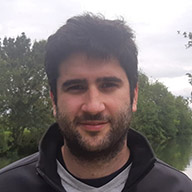
Premio GEQO a Jóvenes Investigadores al Dr. Miquel Navarro Blasco por sus excelentes contribuciones en su etapa posdoctoral e inicio de su carrera independiente en el campo de la química organometálica.
La reunión de evaluación de las candidaturas presentadas tuvo lugar el día 2 de junio. La Comisión de premios ha estado formada por los siguientes miembros:
- Antonio Echavarren (Medalla de la RSEQ, 2010)
- Javier Cabeza (Medalla Rafael Usón, GEQO, 2020)
- María Concepción Gimeno (Medalla Rafael Usón, GEQO, 2022)
- Pedro Pérez (Medalla de la RSEQ, 2016)
- En calidad de secretaria de la Comisión (sin voto) asistí yo misma como Presidenta del GEQO.
En mi nombre y en el de la Junta de Gobierno del Grupo quiero transmitir a los premiados nuestra más efusiva felicitación.
Ana C. Albéniz
Presidenta del GEQO
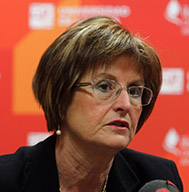
Elena Lalinde Peña
Elena Lalinde Peña completed her PhD in Chemistry at the University of Zaragoza focusing on the Synthesis and reactivity of Palladium Complexes with isonitrile ligands. After that, she joined as associated professor to the University College of La Rioja, now Universidad de La Rioja, where she created her own research group developing her research in platinum compounds with alkynyl ligands. She made two stays in the U. of Sheffield with Prof Maitlis initiating a successful project on Metalomesogenos that was reflected in 11 publications. In 1989 becomes Professor Titular and in 2007 Full Professor of La Rioja University.
Her research activity has focused on the preparation of new mononuclear or supramolecular systems based on organometallic systems with interesting structural properties, reactivity or potential in the area of new materials (luminescence, electronic communication, bioimaging etc). In the last decades her group has also focused our interest in cytotoxicity and biological studies and in the preparation of mesoporous hybrid materials based on Silica and Titania aiming to study their potential as luminescent or photocatalytic materials.
She has been Vice-Deen of the Facultad de Ciencia y Tecnología, has led several National Projects, codirected over 24 PhD Thesis and published over 200 peer-reviewed articles and several reviews including the chapter of Platinum-Carbon π-Bonded Complexes» of the 3rd Ed. of the Comprehensive Organometallic Chemistry, COMCIII ,
She and her research group MATMO were awarded with the Premio del Consejo Social 2016
Currently, all her work focuses on fundamental chemistry and functional materials with potential in medical transfer and technological innovation.
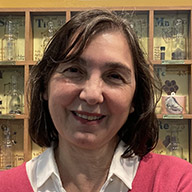
María del Carmen Nicasio Jaramillo
M. Carmen Nicasio earned her PhD from the Universidad de Sevilla in 1993, working on iridium-complex-mediated C–H bond activation under the supervision of Prof. Ernesto Carmona. She then joined Prof. Robin N. Perutz’s group at the University of York (UK) as a Marie Curie Postdoctoral Fellow, focusing on the isolation and reactivity of photochemically generated, low-coordinate Ru(0) and Os(0) species. In 1996, she moved to Prof. Pedro J. Pérez’s group at the Universidad de Huelva to research copper-catalyzed organic reactions. Appointed Lecturer in Inorganic Chemistry in 1999, she later returned to the Universidad de Sevilla in 2010, where she has been Full Professor in 2011.
Since 2014, she has led an independent research group dedicated to the reactivity and catalytic applications of late transition metal complexes. Her recent work centers primarily on low-coordinate group 10 metal complexes, with particular emphasis on their utility in catalytic C–C and C–heteroatom bond-forming reactions, alongside gaining a detailed mechanistic understanding of these transformations. Her research has been consistently funded by national and regional competitive grants. She has co-authored over 80 papers in JCR-indexed journals, several book chapters, and a patent, and she served as a Guest Editor for a Dalton Transactions special issue in honor of Prof. Perutz’s career.
Miquel Navarro Blasco
Miquel Navarro Blasco obtained his BSc (2012) and MSc (2013) in Chemistry at the Universitat de Barcelona. Therafter, he moved to University College of Dublin (Ireland) to start his PhD studies in organometallic chemistry and homogeneous catalysis under the supervision of Prof. Martin Albrecht. In 2015 he moved with the entire group to Bern (Switzerland), where he obtained his PhD degree in late 2017 with the highest distinction summa cum laude, and receiving the Universität Bern best PhD Thesis Award. In particular, his work focus on the synthesis and catalytic application of late transition metal complexes bearing electronically flexible ligands such as pyridylidenamide ligands (PYA) and N-heterocyclic carbene ligands (NHCs). He also undertook a 3-month research visit at the laboratories of Dr. Mariola Tortosa in the Universidad Autónoma de Madrid (Spain) working on asymmetric copper-mediated borylation transformations.
After obtaining his PhD, in 2018 he joined the group of Dr. Didier Bourissou in the Laboratoire Hétérochimie Fondamentale et Appliquée (LHFA) as a postdoctoral fellow in Toulouse (France) supported by an EarlyPostdoc Mobility Fellowship by the Swiss National Science Foundation (SNF). His research projects focused on the development of new hemilabile ligands based on phosphines and NHCs for gold chemistry. In 2020, he joined the group of Dr. Jesús Campos in the Instituto de Investigaciones Químicas (IIQ-CSIC) in Sevilla as a Juan de la Cierva Fellow to develop new bulky phosphines ligands for metal-metal and metal-ligand chemical cooperativity. In addition, Dr. Miquel Navarro undertook a short research visit at the University of York (UK), studying Solid-State Molecular Organometallic Chemistry in the laboratories of Prof. Andrew Weller, supported by an RSC Development and Travel Grant.
In 2024, Dr. Navarro started his independent research career in the Organic Chemistry Department of the Universidad Autónoma de Madrid as a La Caixa Junior Leader where nowadays he is a Ramón y Cajal fellow. His research group studies chiral cooperative systems based in P-stereogenic phosphines for asymmetric transformations. In 2025, he received the distinction of Investigador Emergente in Chemistry from the Sección Territorial de Madrid – RSEQ as a recognition of his early-career scientific achievements.